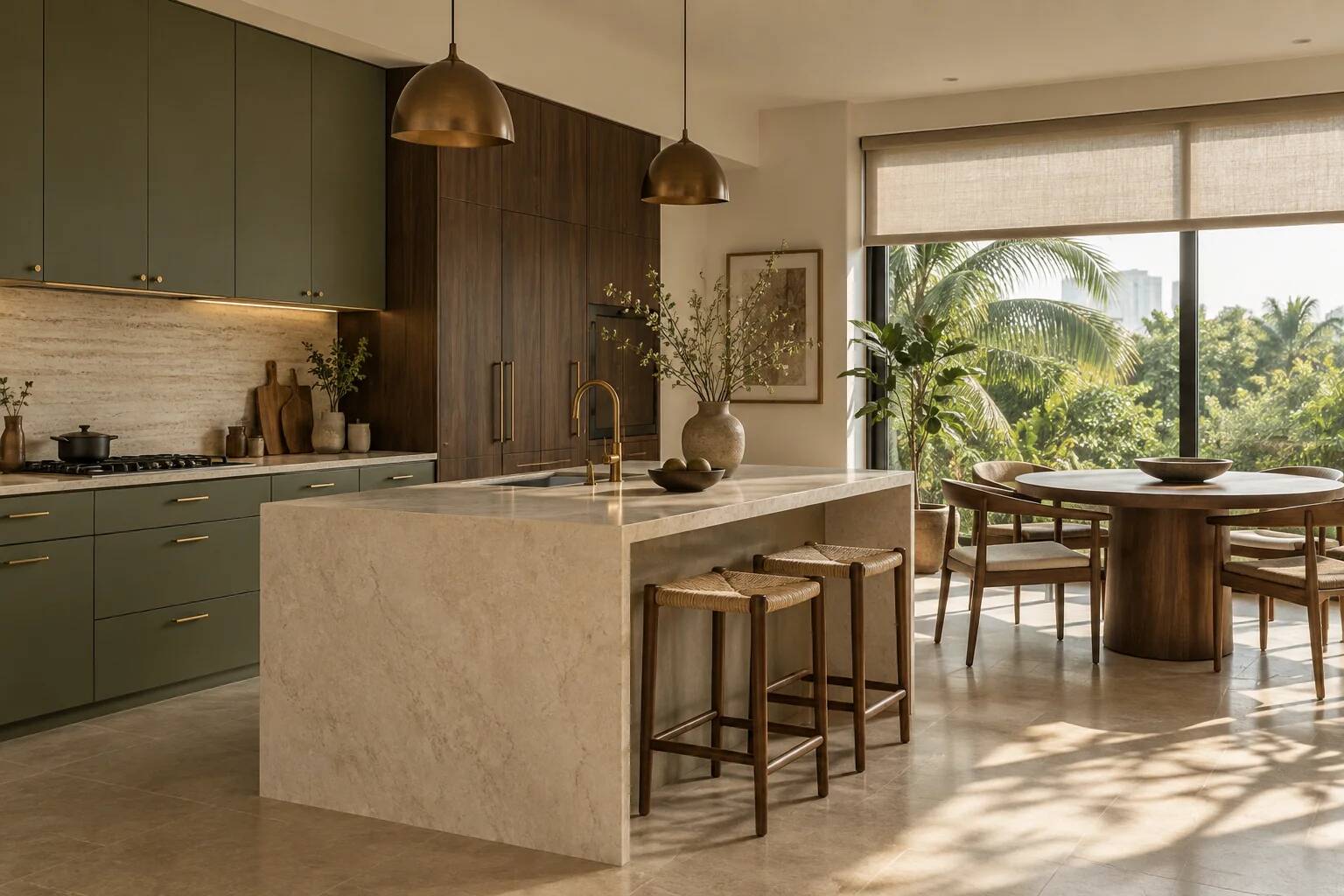
Why interior quotations vary so widely
Two homes with the same number of bedrooms can need very different interior budgets. One family may need extensive storage, a new kitchen and electrical changes. Another may already have a usable kitchen and need only wardrobes, lighting and furniture. The floor area is only one part of the picture.
A meaningful estimate should connect cost to the exact work, materials and responsibilities included. If the scope is vague, the total can look attractive at first and still grow later.
Instead of asking only “What is the total?”, ask “Exactly what is included, what is excluded and what decisions could change this amount?”
Seven decisions that shape the budget
1. The rooms and work included
Complete home interiors may include space planning, kitchen, wardrobes, storage, lighting, furniture, false ceiling, painting and execution. A focused scope may cover only a kitchen and wardrobes. Write the room-by-room scope before comparing numbers.
2. How much storage you genuinely need
Full-height wardrobes, utility storage, crockery units, study areas and media units add material, hardware and installation. Storage should begin with what you own and how you use it—not with filling every empty wall.
3. Material, finish and hardware choices
Board specifications, shutters, finishes, drawer systems, hinges, handles and internal accessories affect both cost and everyday performance. Ask where a premium improves durability or convenience and where a simpler choice will work just as well.
4. Civil, electrical and plumbing changes
Moving walls, changing floor finishes, relocating plumbing points or adding electrical circuits can alter cost and timing significantly. These items should be identified during site review rather than discovered halfway through execution.
5. Custom work versus repeatable modules
Unusual dimensions, curves, specialist finishes and one-off furniture need more detailing and site coordination. Customisation is valuable when it solves a real need; it is less useful when it adds complexity without improving how the home works.
6. Site readiness and access
Apartment handover status, working-hour rules, lift access, storage space and permissions can affect how work is sequenced. A practical plan accounts for these conditions before the start date is committed.
7. Project coordination and accountability
A quotation may include only products, or it may include design, procurement, vendor coordination, site supervision, milestone tracking and handover. Understand who owns each moving part and what happens when two trades need to work together.
How to compare interior quotations fairly
Comparing only the final totals can be misleading when the underlying scopes differ. Put proposals side by side and check:
- Room-by-room inclusions and quantities
- Material and hardware specifications
- Design, delivery, installation and supervision responsibilities
- Electrical, plumbing, civil work, painting and debris removal
- Taxes, transport and site-condition assumptions
- Approval stages, payment milestones and change-request process
- What is explicitly excluded
If a line item cannot be explained plainly, it is not yet ready for a confident decision.
How to set a practical interior budget
Begin with three lists: what your home must have, what would make daily life meaningfully better, and what would simply be nice to add. This makes trade-offs easier when the first scope is larger than the available budget.
Protect the items that are difficult to change later—functional layouts, essential electrical work, dependable hardware and the storage your routines require. Decorative layers and movable pieces can often be phased without compromising the foundation of the home.
What to bring to the first budget conversation
- Your floor plan and Bengaluru location
- Possession or site-availability date
- Rooms and functions you want included
- Reference images, along with what you like about them
- Existing items you plan to keep
- A comfortable investment range
- Your preferred move-in or completion window
You do not need a finished brief. These basics are enough to begin a useful scope discussion and identify the questions that need a site review.
Plan the scope before chasing a number.
Tell Lunea Interio about your home, priorities and budget range. We will help you understand the right scope and the clearest next step.
Book a free discovery call